

Japanese Animal Gachapon Have a Very Strange Sense of Humour.
A pigeon crosses the pavement like it owns the place.A rabbit can look deeply offended by absolutely nothing. A cat manages to turn falling asleep into a performance. Animals are funny before anyone does a thing to them.
A pigeon crosses the pavement like it owns the place. A rabbit can look deeply offended by absolutely nothing. A cat manages to turn falling asleep into a performance. Animals are funny before anyone does a thing to them.
Now shrink that familiar personality to the size of your palm, give it one completely unnecessary detail, and something changes. You aren't just looking at a cute animal anymore. You're looking at a tiny story with a punchline.
That's what we look for in Japanese animal gachapon: capsule toys that don't rely on a famous character or an elaborate explanation. They just make you stop, smile and lean a little closer.
The joke begins with an ordinary animal.
Sometimes a whole miniature story starts with a single, unmistakable habit. A pigeon walks with a determined little head-bob. A cat can turn a harmless mishap into a full-scale disaster. A parakeet knows how to look more relaxed than most of us ever feel.
A pigeon with wheels. Naturally.
Watch a pigeon on a busy street. It has somewhere important to be, apparently. Now imagine a capsule toy that takes that serious little walk and adds wheels. Pull the pigeon back, let go, and it rolls away while its head bobs back and forth.
It's a real miniature toy, and the joke is wonderfully specific. Nobody needed to make a pigeon into a pull-back car. But once you've seen that head movement turned into a mechanical feature, the idea makes ridiculous sense.

The cat and the airborne miso soup.
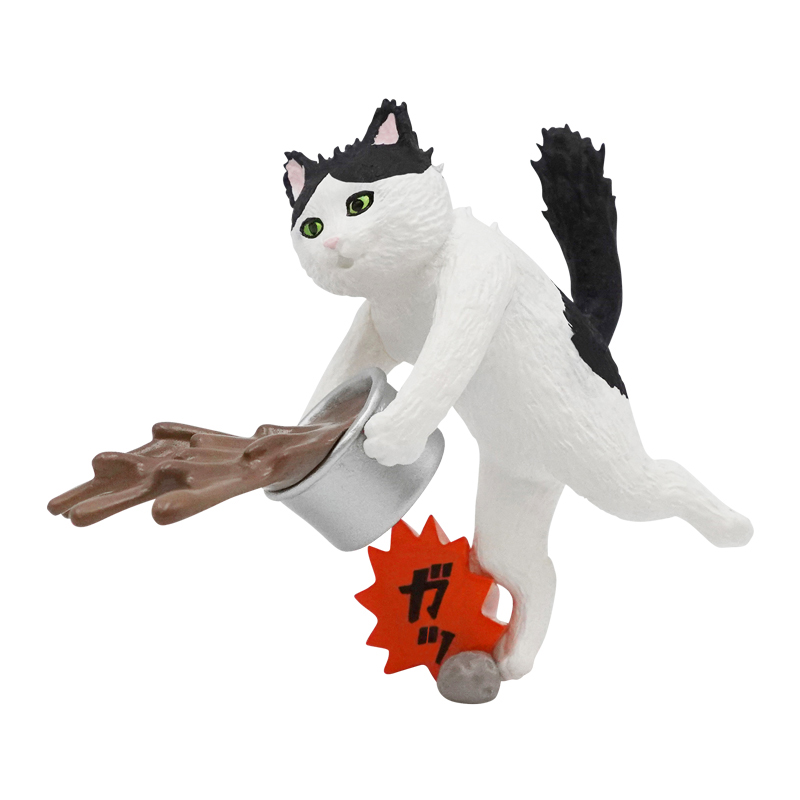
Another capsule toy freezes a cat at the worst possible second: it has stumbled while carrying miso soup. The soup flies out, the cat's tail shoots up, and the little figure captures the exact moment before everything hits the floor.
There is no epic adventure here. Just one very ordinary household accident, treated with the drama it deserves. That is what makes the scene so good: a disaster small enough to hold between two fingers.
Parakeets who've taken the day off.
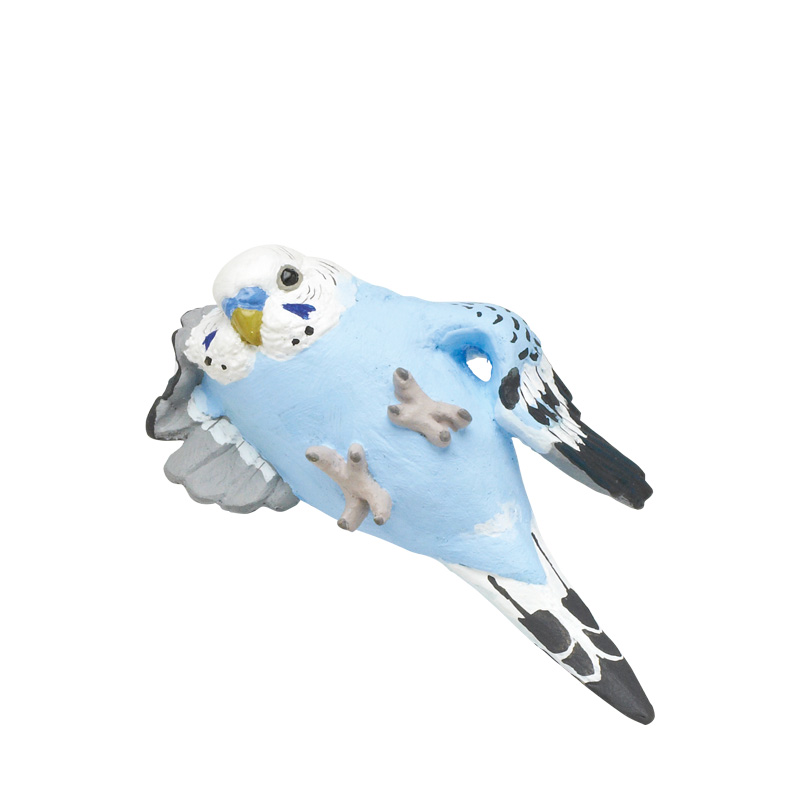
Then there are miniature parakeets that seem to have no intention of doing anything at all. One rests its cheek against a wing; another lies on its side, lounging like someone who has cancelled every plan for the weekend.
The birds are still recognisably birds. What changes is the attitude. Give a tiny creature a human-looking moment of leisure, and suddenly it feels like a little person who has earned a holiday.
Three very different scenes. One shared trick: notice something familiar about an animal, then push it just far enough that you have to look again. That is the kind of detail that catches our eye at TOKYODROP.
Why is the rabbit hanging out with the laundry?
Picture a little rabbit dangling from a colourful clothes peg. Not escaping from one. Not chewing it. Just hanging there as if this is a perfectly ordinary way to spend an afternoon.
It's a lovely example of what happens when you move an animal into the wrong part of everyday life. The peg says laundry day. The rabbit says fluffy, soft and alive. Put the two together, and a chore becomes a small absurd scene.
There are cats, an otter and a hamster in this tiny laundry-day world too. The appeal isn't a complicated backstory. It's the instant recognition of a familiar domestic moment gone pleasantly off-script.

It's exactly the sort of unnecessary detail we like: a miniature that makes an ordinary object suddenly feel as though it has a secret life.
Sometimes the best animal is a little unsettling.
A seahorse is a strange-looking creature even at full size. So is a porcupinefish. Put either one in a transparent body, add a colourful skeleton-like pattern, and the result sits somewhere between a science display and a pocket-sized curiosity.
It doesn't have to be anatomically accurate to make you curious. These are playful, specimen-inspired animal charms, not scientific models. The interesting part is how they change your reaction: the first glance says *animal*; the second asks, *what am I looking at?*

That odd little pause is the point. A souvenir doesn't have to be beautiful in the predictable way. It can be peculiar, slightly ridiculous or just impossible to classify. Sometimes that's why you keep it.
Not every cute animal belongs in the same collection.
Some animals are charming because they're perfectly made. Others are charming because something is a little wrong. A pose is too human. A face is too serious. A familiar creature has been assigned an extremely unnecessary task.
There's no shortage of small, cute things. The ones that interest us at TOKYODROP have another ingredient: a tiny surprise that survives the first laugh. You notice something new when you pick one up. You want to show it to someone. You remember it later for no particularly sensible reason.
We don't need an animal to look famous. We need it to be interesting.
That's our favourite kind of discovery. Not a catalogue of who made what, or a lesson in toy releases. Just a collection of strange little objects that make an ordinary day feel less ordinary.
A rabbit on the washing line. A transparent little sea creature. Absolutely nothing you needed — until you saw it.
FOUND AT TOKYODROP

