
Weird Japanese Stuff: The Art of Making Ordinary Things Ridiculous
Who thought a car that won't start deserved its own miniature toy? And why disguise an umbrella pouch as bread? Some of Japan's most entertaining designs begin with questions nobody needed to ask.

Turn a tiny plastic key, and an engine starts. Or it doesn't. Sometimes all you get is the miserable sound of an engine trying, and failing, to turn over.
There's no car attached to the key. You're not going anywhere. Somebody simply decided that the experience of starting a car—including the disappointing part—deserved to exist as a little toy.
This is the corner of weird Japanese stuff that interests us most. Not the enormous novelty inventions made for a laugh, but familiar objects given an unexpected second life. A key. A bread wrapper. A phone charger. A lunchbox. Nothing extraordinary, until someone changes one small detail.
A car key with nowhere to go
A real car key has an important job. This miniature ignition-switch toy has exactly one: to make you want to turn it again.
There's a little key, a little cylinder, and an engine sound. Some versions even reproduce the unmistakable frustration of a failed start. It's an oddly specific choice. Why make a miniature of a whole car when you could make just the part that goes click?

The fun is in what your fingers remember. You insert the key. You turn it. You wait for the sound. A routine gesture, separated from the serious business of driving, suddenly becomes something worth paying attention to.
Even the failed start makes sense, in its own ridiculous way. The tiny disappointment is part of the charm.
Somebody sent an umbrella to the bakery
A folding umbrella is useful. Its pouch, less exciting. Usually it's a plain sleeve that you lose in the bottom of your bag.
Now imagine that sleeve disguised as a packet of bread.
Not a bread-print tote bag. An actual folding-umbrella pouch designed to resemble a Japanese bakery snack, complete with the visual language of food packaging. You could walk past it thinking it belonged near the sandwiches.

The joke works because the object keeps doing its real job. A rainy day still needs an umbrella. A damp umbrella still needs somewhere to go. Only now the most forgettable part of that routine has a little personality.
You don't need a bread-shaped umbrella pouch. That's quite different from saying you wouldn't enjoy one.
Meanwhile, something is eating your charging cable
A phone cable doesn't invite much affection. It lives behind the desk, gets tangled in bags, and starts looking tired long before the phone does.
This is little animal figures that fit around a charging cord and appear to bite the phone when it's plugged in. The lineup includes cats, sharks, pandas, crocodiles and other small creatures. Dreams also describes the accessory as helping protect the cable.
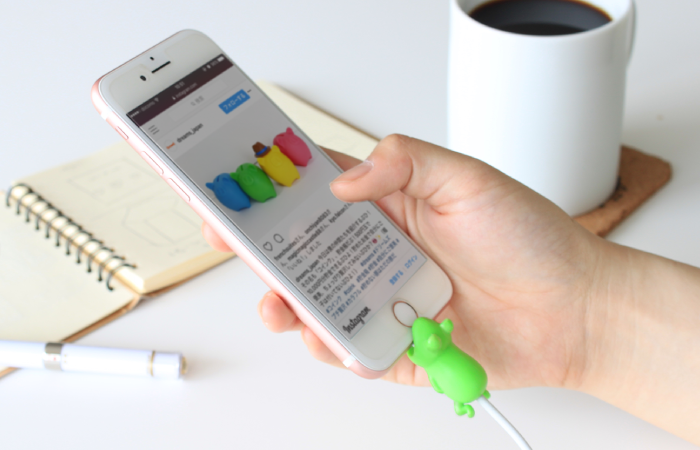
It's a neat piece of design. The animal's open mouth makes sense only at the exact moment you use the cable. Plug the phone in, and the joke completes itself.
It doesn't improve the message you're sending, charge your phone any faster, or give you one more minute of battery. What it changes is the expression on the face of an object you probably look at every day.
The rice cooker that looks like your lunch
Not every unusual Japanese object is a tiny toy. Sometimes the odd idea is completely practical.
It looks more like something you would carry lunch in than something you would cook with. But put rice and water inside, connect the power, and it cooks a single serving. The maker advertises cooking from about 14 minutes, excluding soaking and resting time.
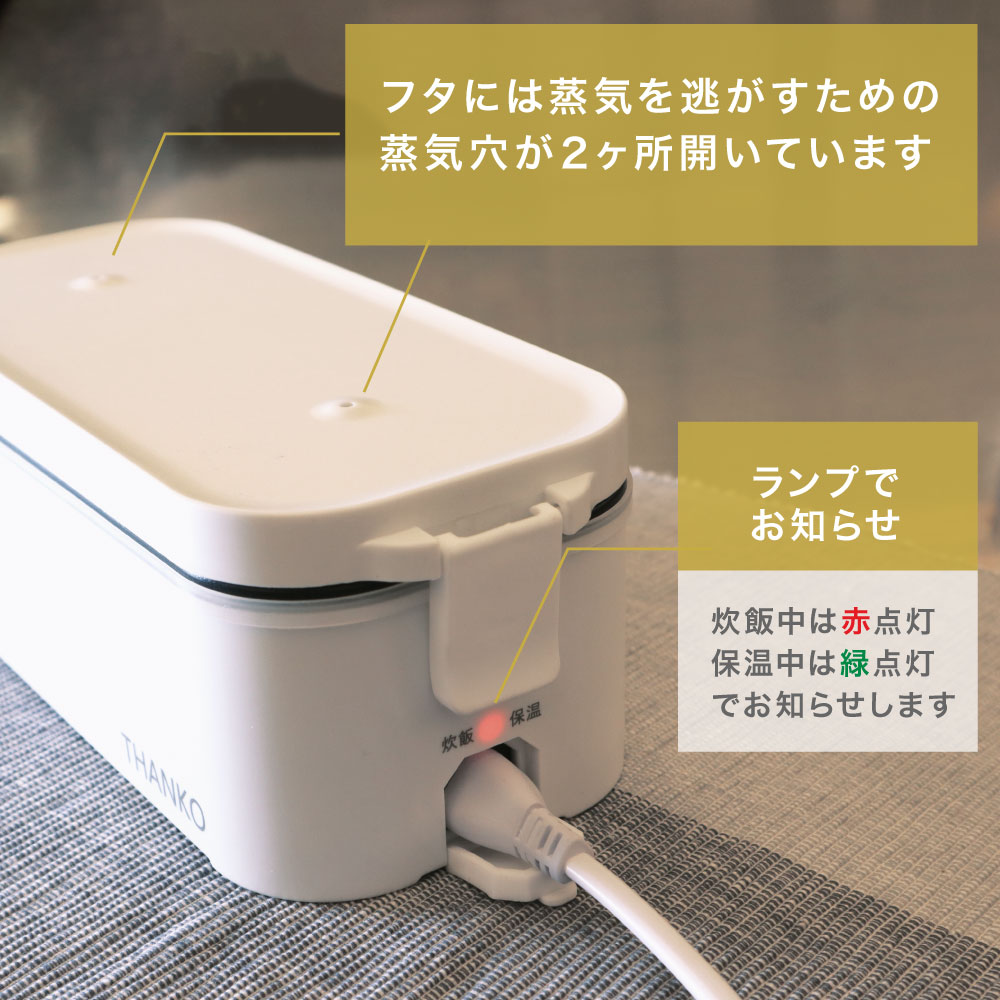

The first reaction is probably, Why is the rice cooker so small? Then a second thought arrives: for somebody eating alone, why should the entire kitchen get involved?
That's the pleasure of this particular kind of strange design. It can look absurd for half a second, then turn out to be a perfectly sensible answer to a real problem.
There's a difference between strange and pointless
Japan has a name for one especially mischievous approach to invention: chindōgu. Popularized by inventor Kenji Kawakami, these are deliberately almost-useful devices—the kind of solution that creates a new problem of its own. One of the movement's principles is that a true chindōgu isn't meant to be a practical product for sale. The distinction matters.
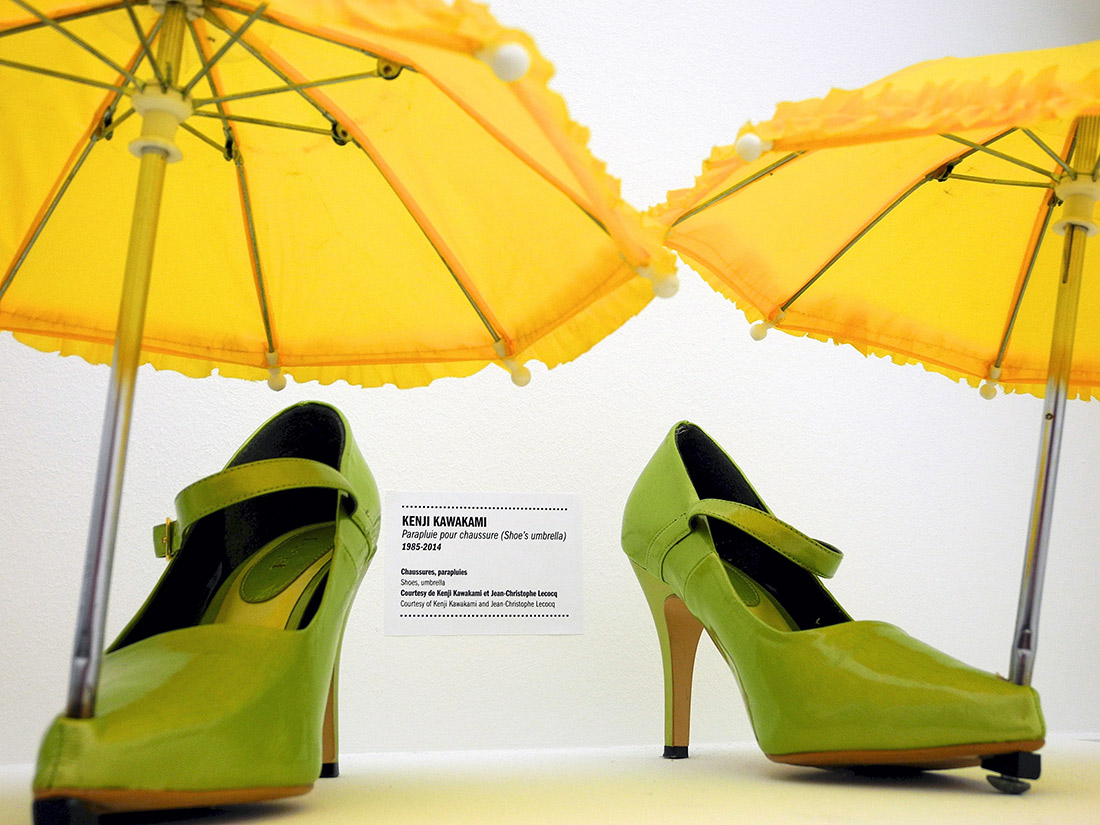 Kenji Kawakami's umbrella shoes: just plausible enough to make you look twice. Photo credited to Touristos / Flickr, via Tofugu.
A working rice cooker isn't chindōgu. Neither is a useful umbrella pouch. And the little engine-key toy isn't trying to solve a household problem in the first place.
They share something else: a willingness to ask a question most sensible design meetings would probably skip. What if this ordinary thing behaved slightly differently? What if it looked like lunch? What if it had a face? What if the part of driving worth keeping was the sound of failing to start?
There's also the broad world of zakka, a Japanese word often used for miscellaneous everyday goods. It includes useful household objects as well as decorative, playful ones. The boundaries between necessity, personal taste and small pleasures can be surprisingly loose. That's part of what makes a good collection of everyday things so enjoyable to browse.
Of course, not every Japanese product is quirky, and Japan doesn't have a monopoly on odd ideas. The interesting part isn't a claim that a whole country thinks alike. It's the sheer variety of ways ordinary things can be reconsidered.
Look at the boring stuff again
A key usually promises a destination. An umbrella means rain. A cable means your battery is low. A lunchbox means somebody packed food earlier.
Each one carries a small script. We know how it works before we even pick it up.
Then a designer rewrites one line.
The key makes a noise but opens nothing. The umbrella's pouch resembles a snack. The cable acquires teeth. Lunch cooks inside the lunchbox.
For a moment, you see something familiar as if it were new. That might be the best thing about these strange little objects: they give the everyday world another chance to surprise you.
And tomorrow, when you reach for your actual keys, you may find yourself smiling at the sound they don't make.
FOUND AT TOKYODROP
Items from this story
MORE ODD LITTLE FINDS
Explore related finds


